
Are You A Professional?

Most people are aware that the Department of Education, in its infinite stupidity, has reclassified a variety of careers as no longer professional.
The list includes:
Nursing
Physician assistants
Physical therapists
Audiologists
Architects
Accountants
Educators
Social workers
We should be shocked by the downgrade of all these specialties, but for now I want to concentrate on nurses.
Previously, nursing graduate programs, especially those preparing future nurse practitioners, nurse anesthetists, and nurse educators, were treated similarly to medicine, pharmacy, dentistry, and veterinary medicine in federal aid structures.
The reclassification does not alter nursing licensure, clinical standards, or credentialing. It targets how graduate nursing programs are treated within federal student aid systems.
Beginning in July 2026, the OBBBA caps annual loans for new borrowers at $20,500 for graduate students ($100,000 aggregate limit), and $50,000 for professional students ($200,000 aggregate limit) — a term the committee defined consistent with existing regulatory text. Previously, graduate students could borrow up to the cost of attendance, which led institutions to offer expensive graduate programs with a negative return on investment.
This means that Nursing students in graduate programs will be subject to standard graduate loan limits. They will no longer receive educational borrowing allowances they once enjoyed when listed in the professional degree fields.
Removing the “professional degree” designation carries other consequences. Universities rely on these definitions to allocate funding, set tuition, and differentiate among disciplines. Federal recognition signals how policymakers, employers, and the broader public regard people in these fields. Will this lower the respect people in these fields receive?
Nursing is the largest healthcare profession in the United States, with about 4.5 million registered nurses. However, there is a serious shortage of nurses in the US.
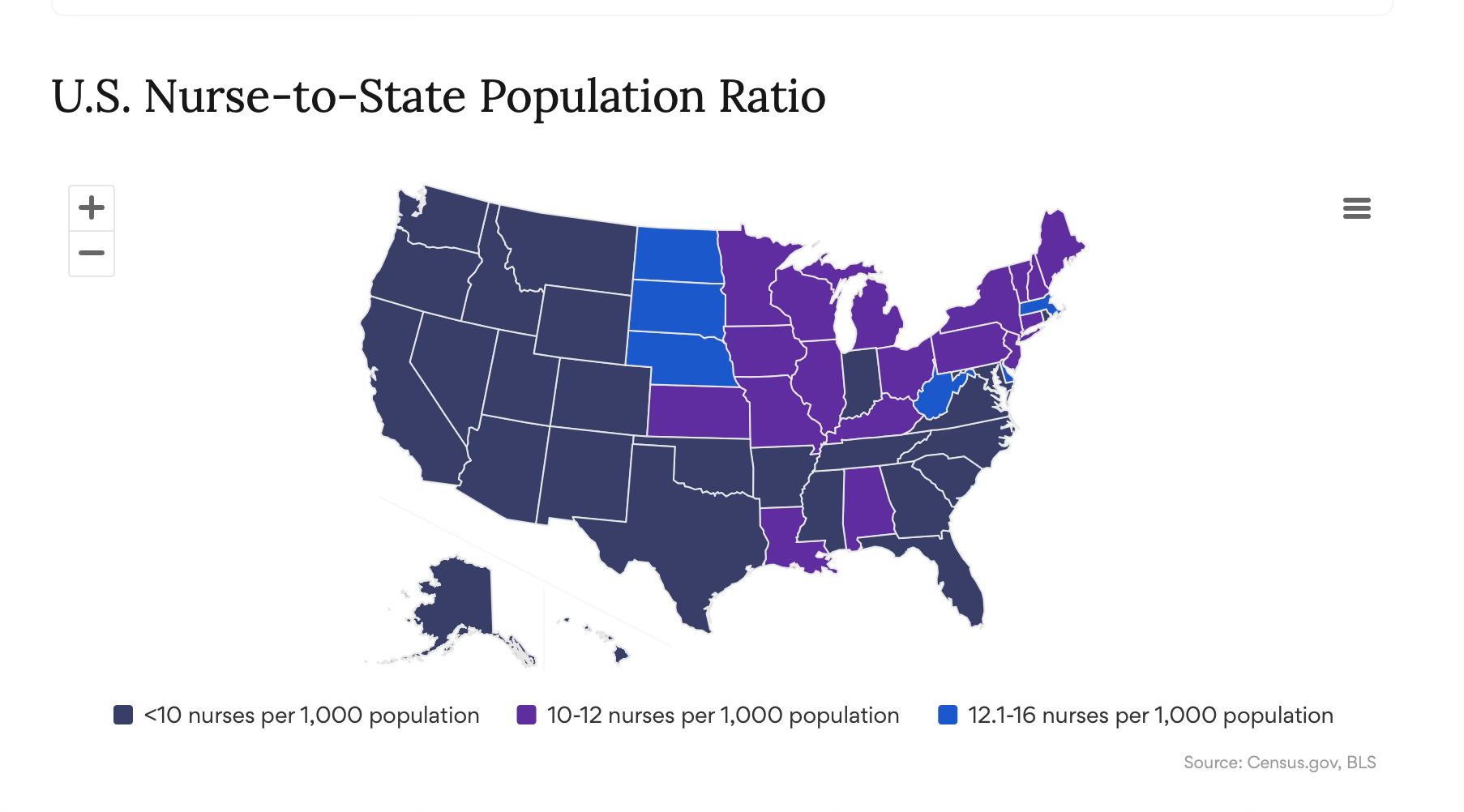
According to a survey by the American Association of Colleges of Nursing (AACN), there are currently 267,889 students enrolled in Bachelor of Science in Nursing (BSN) programs at 869 colleges and universities across the U.S.
The reason for a nursing shortage in the US is several-fold. Lack of school enrollment: In 2023, nursing schools rejected over 65,000 qualified applicants. There were several reasons, but the primary one was a lack of faculty.
Over 1 million RNs are projected to retire by 2030. In 2022, the median age of employed registered nurses was 46, and more than 25% of all RNs said they would retire or leave the nursing field within the next 5 years. As nurses age, they often step into the role of educator. However, this group is also nearing retirement, leading to a shortage of educators in nursing schools.
As a side note, it isn’t just nurses aging; the US population is aging, and there is a demand for geriatric nurses who provide care to older adults with chronic conditions.
There is also nurse burnout. Nurses face profound physical and emotional exhaustion. This exhaustion stems from heavy workloads, long hours, and the pressure of treating critically ill patients, to name a few.
As of 2022, there were about 500,000 immigrant nurses in the U.S., helping with the issue of nursing shortages.
On September 19th, Trump signed an executive order imposing a $100,000 annual fee for H-1B visa applications. The $100,000 yearly fee could significantly reduce the use of H-1B visas for foreign nurses. This could exacerbate staffing, particularly in underserved rural or urban communities.
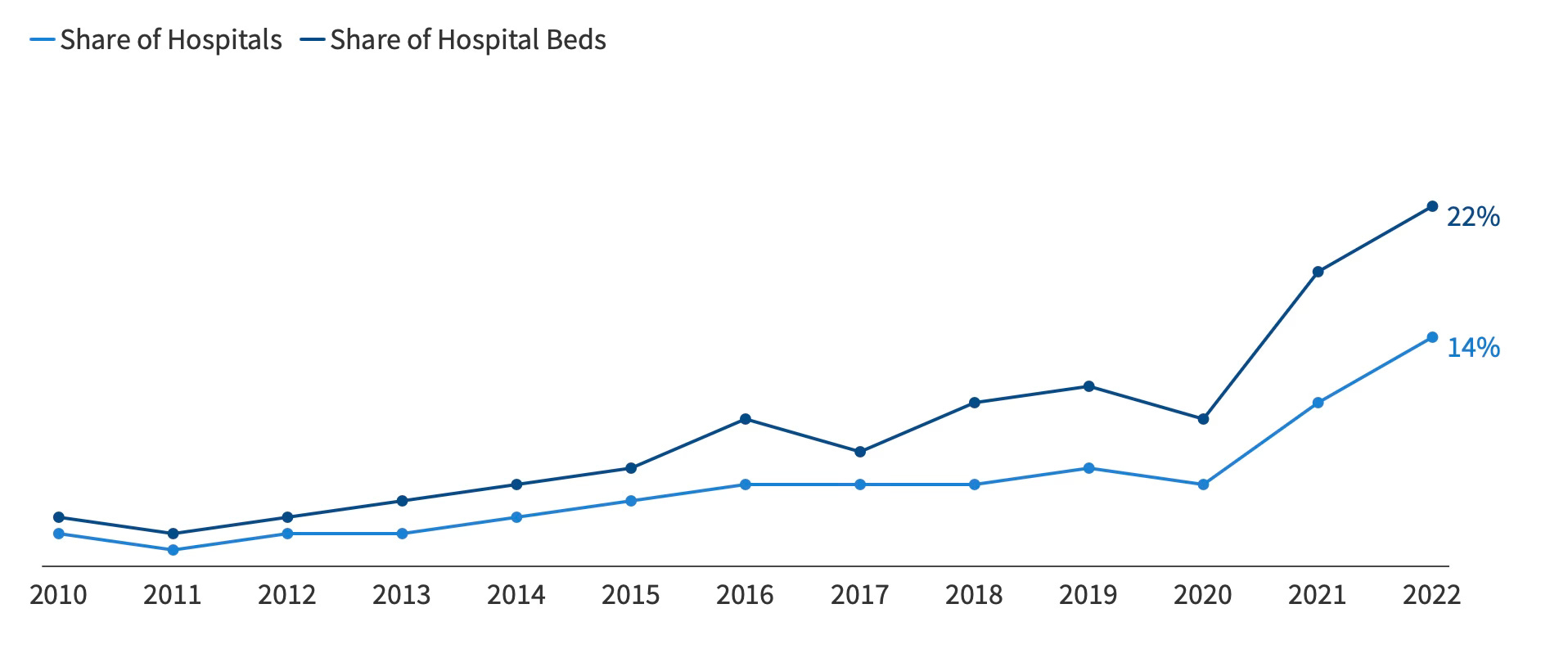
Combine all of these factors, and the government has created an Ouroboros: fewer nurses, increased burnout, fewer educators, fewer nurses.
Nursing Associations have not taken this lying down. The American Nurses Association (ANA) launched a petition to fight the lower classification.
The Department of Education responded by calling the concerns around the move “fear-mongering” by “certain progressive voices”.
Here is a short list of what researchers have found when there is a shortage of nursing staff:
A higher proportion of baccalaureate-prepared nurses (BSN) in hospital settings, regardless of educational pathway, is associated with lower rates of 30-day inpatient surgical mortality.
Reducing nursing skill mix by adding assistive personnel without professional nurse qualifications may lead to preventable deaths, erode care quality, and exacerbate nurse shortages.
Higher patient loads were associated with higher hospital readmission rates.
Increasing a nurse’s patient load by just one patient was associated with increased urinary tract and surgical site infections.
Higher nurse staffing levels are associated with fewer deaths.
The present administration is working hard to dismantle the Department of Education, while it does as much damage as it can to our education system before it is gone.
Also in the News
A federal advisory panel with power over vaccine policy has voted to stop recommending a universal newborn shot to prevent the hepatitis B virus, which causes liver disease.
Amnesty International has released a report documenting torture and enforced disappearances at Florida’s Everglades Detention Facility, the state-owned immigration prison Governor Ron DeSantis built with $360 million in emergency management funds.
In the ongoing attack on the transgender community, HHS changed the name of transgender health leader on her official portrait.
Using the Shadow Docket, the U.S. Supreme Court ruled that Texas can use its new GOP-backed congressional map next year – even though a lower court found that it was likely an illegal racial gerrymander. The ruling could result in five more Republican seats in Congress.
According to a legal filing, Tyson Foods is seeking permission from the Securities and Exchange Commission (SEC) to exclude a shareholder proposal from its upcoming 2026 proxy ballot. The proposal, submitted by the Sisters of St. Francis Charitable Trust, demands a report on how “recent changes in United States (US) immigration law, policies, and enforcement priorities” will impact the company’s finances and operations.
On December 4, a White House spokesperson confirmed to The Washington Post that the original Trump ballroom architect, McCrery Architects, is out. This comes after multiple reports that Trump and Jim McCrery, CEO of McCrery Architects, clashed repeatedly over the size and scope of the new ballroom.
DOGE is not dead; it has just gone underground.
Things worth the long read or listen
I spent a good part of my weekend reading the European reactions to Trump’s offensive National Security Strategy. This particular writer has put the entire thing in perspective in a very cogent way.
In the interim, the Soviet Union praised Trump’s National Security Strategy, calling it an encouraging change of policy that largely aligns with Russian thinking.
A dear friend sent me this link, and I think it is worth watching for everyone.
The American presidency has journeyed from a modest, constitutionally constrained office to a “super presidency” that commands total attention and power. President Trump has pushed these powers to the utmost, enabled by a failure of political courage in Congress and an ideological Supreme Court.
It is 7 minutes long and on Facebook - I hope you can access it. https://www.facebook.com/reel/1417807089772290